Time, Cost and Quality in Construction | Progetti d'Italia 2026
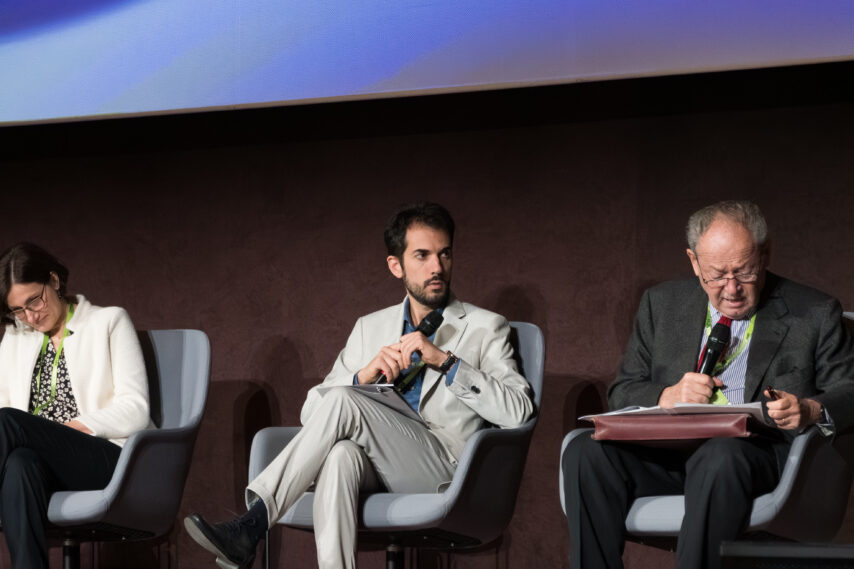
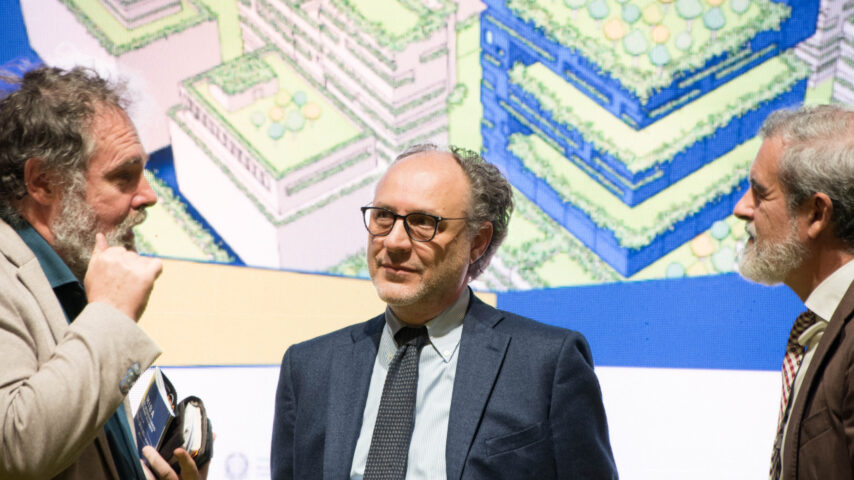
Eng. Giampiero Brioni took part in the conference “Managing Time, Cost and Quality in the Construction Industry” as part of Progetti d’Italia 2026, organised by Il Quotidiano Immobiliare at fieramilano Rho. Cost opacity, process fragmentation, investment governance and the sector’s ability to attract the next generation of professionals: the key themes of a discussion that spanned the entire construction supply chain.
Share on:
Time, cost and quality in construction: three interdependent variables whose balance determines the outcome of any building project. This was the focus of a conference held on 21 May at fieramilano Rho as part of Progetti d’Italia 2026, organised by Il Quotidiano Immobiliare. Eng. Giampiero Brioni, alongside Marzia Morena of Politecnico di Milano, Massimo Facchini of HUB Engineering, Matteo Sbrosi of Kervis SGR and Dario Bozzoli of Colombo Costruzioni, joined a discussion that cut across the entire supply chain: academia, finance, contracting and consortia.
A cultural gap before a methodological one
The common thread running through the debate was clear: the tools to manage cost and time already exist, but their effectiveness remains constrained by a more fundamental issue. The disconnect between design and construction continues to produce a fragmented process in which critical issues surface late — often on site — and translate into variations, disputes or compromises on quality. Cost standardisation remains a distant goal, hampered by a structural opacity that makes it difficult even to establish reliable market benchmarks.
The discussion highlighted how this dynamic is not a matter of individual tools or professional roles, but of cultural context: an industry that, despite significant progress over recent decades, still carries deep-rooted mistrust between its actors and a predominantly prescriptive approach to contractual relationships.
Early-stage collaboration and process governance
Several speakers converged on a key point: bringing all relevant competencies — design, construction, economic — to the table in the early stages of the process can significantly reduce downstream risk. BIM was recognised as a major contribution in this regard, not only as a technical tool but as a framework that compels cross-disciplinary engagement, challenging self-referential working practices.
The conversation also addressed governance as a frequently underestimated factor: structured control and reporting systems, deployed from the earliest project stages, were identified as prerequisites for detecting issues in time and safeguarding investments. A shift from penalty-based to incentive-based contractual mechanisms emerged as a potential lever to align stakeholder interests and foster genuine cooperation.
Attracting tomorrow’s professionals
The final part of the discussion turned to the sector’s medium-term sustainability. Public perception of the construction industry remains unfavourable, the appeal of technical professions linked to the built environment is declining, and demographic trends are further shrinking the pool of potential professionals. The debate underscored the persistent gap between academic training and industry practice, while also acknowledging promising efforts to bridge it through direct integration of university programmes and live construction sites.
Compared to a few decades ago, cross-functional roles such as the Project Manager have become established and the level of required specialisation has grown considerably. Yet the panel’s consensus was unanimous: there is no single solution. The industry needs to make this work appealing again — a process already underway, but one that demands a shared cultural shift across the entire supply chain.
B&B Progetti granted its patronage to the second edition of BIMeet&Greet, organised by BIMeet and SkeinBIM at the Brixia Forum in Brescia. Eng. Marco Baccaro, Managing Partner and event Ambassador, sat on the jury of the NextGen BIM Award, dedicated to theses on the digitalisation of construction.
Eng. Giampiero Brioni takes part in the third instalment of the AICE 2026 webinar series to explore how the integration of Cost Management and BIM can enable value management throughout the entire lifecycle of a project.
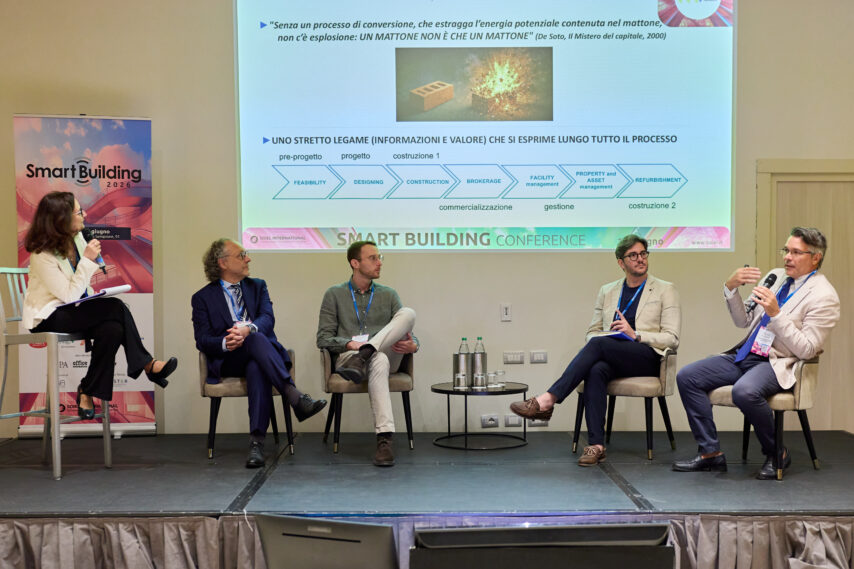
Eng. Giampiero Brioni takes part in the Smart Building Conference 2026, organised by Soiel International, with an interview on cost planning within a BIM environment, the role of the Quantity Surveyor and the recurring challenges of BIM workflows supporting Cost Management.
As of January 2026, B&B Progetti has integrated into its statute the formal commitment to generate measurable positive impact on society and the environment. The transformation formalizes responsibilities already embedded in company operations, complementing founding values with an annual reporting structure for generated effects.
The B&B Progetti team gathered for the traditional Christmas dinner, an important moment of sharing and conviviality. An evening dedicated to the people who make the company’s work possible every day.
On November 28-29, 2025, B&B Progetti co-organized inHUB 2025 at the Museo Nazionale della Scienza e Tecnologia “Leonardo da Vinci” in Milan alongside HUB Engineering and Erre.vi.a. The public session on November 29 featured Eng. Giampiero Brioni addressing cost management in complex projects and Eng. Marco Baccaro exploring artificial intelligence ...
During the seminar organized by the College of Engineers and Architects of Milan in collaboration with RICS, Eng. Giampiero Brioni analyzed the evolution of economic and methodological competencies in complex project management, highlighting the Italian educational gap compared to Anglo-Saxon contexts and presenting operational tools that integrate Business Intelligence, artificial ...
Giampiero Brioni participated in the multidisciplinary debate “I costi del costruito: è ora di fare chiarezza” on construction costs organized by Il Quotidiano Immobiliare, contributing to discussions on Quantity Surveying evolution in Italy and the integration of economic expertise in BIM processes.